

1. Polyester cotton blend: Classic duty style, comfortable and easy to maintain
Polyester cotton blend is the longest used and most widely used fabric in the tactical uniform field. It is usually blended with polyester fiber and cotton in proportion, with common ratios of 65% polyester+35% cotton (TC fabric), 50% polyester+50% cotton (CVC), and some high-end styles may add spandex to enhance elasticity.
core strengths
Comfortable to wear: Cotton fiber brings a skin friendly feeling, fits snugly without itching, and has no obvious foreign body sensation during long-term duty;
Wrinkle resistant and easy to maintain: The polyester component endows the fabric with wrinkle resistant properties, making it less likely to deform after washing and eliminating the need for frequent ironing, making it suitable for daily high-frequency wear;
Cost friendly: Mature raw materials and weaving processes, prices far lower than nylon fabrics, and low pressure for bulk procurement;
Good anti-static performance: Compared to pure nylon, polyester cotton blend is less likely to generate static electricity and is suitable for indoor, computer room and other scenarios.
Main shortcomings
Moderate wear resistance: Cotton fibers have much lower wear resistance than nylon, and high friction areas (elbows, buttocks, pant legs) are prone to abrasion and pilling, resulting in a shorter lifespan in high-intensity outdoor environments;
Poor quick drying: Cotton fibers have a high water absorption capacity, slow drying speed after sweating or rain, sticky and sticky on the body after getting wet, and a sudden drop in body comfort;
Limited strength: Tear strength and anti hooking ability are weaker than nylon fabric, and it is easy to be hooked by tree branches in jungle and mountain scenes.
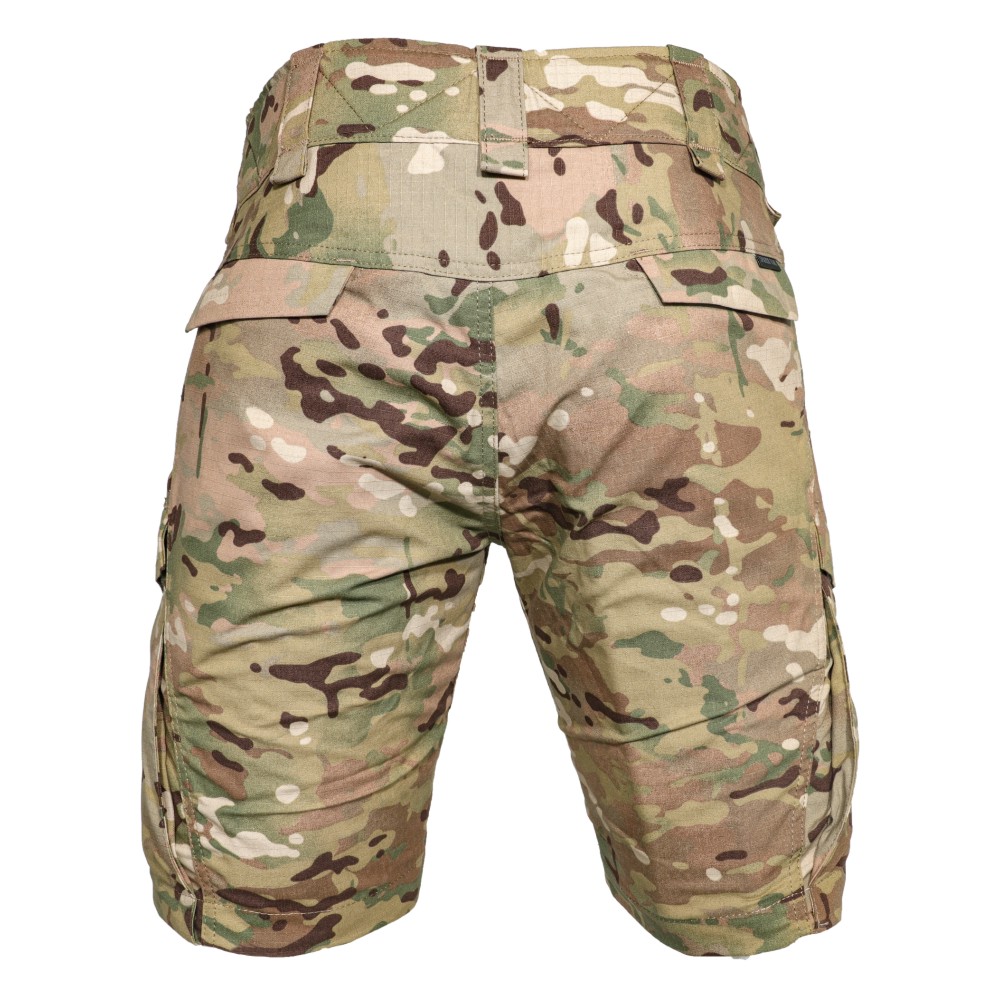
Typical Applicable Scenarios
Low to medium intensity scenarios such as daily duties, indoor security, training and teaching, commuting duty, as well as units with limited budgets that require large-scale procurement. It is a balanced choice that balances comfort and basic durability.
2. Nylon 66: versatile tactical model, lightweight and high-strength
Nylon 66 (nylon 66) is currently the mainstream fabric for professional tactical uniforms, mostly woven using checkered fabric technology, and some styles will be treated with anti splash treatment. It is the type of fabric that balances performance and weight the best.
core strengths
High strength and wear resistance: The wear resistance of nylon fiber itself is 3-4 times that of cotton, and the grid cloth structure further enhances its tear resistance. Under normal duty training, its service life is more than twice that of polyester cotton;
Lightweight and quick drying: The fabric has a light weight and extremely low water absorption. After sweating heavily, it dries quickly without getting wet or sticky, making it suitable for long-term outdoor activities;
Anti wrinkle and anti shrinkage: It is not easy to shrink or deform after washing, and there are no obvious wrinkles when folded and stored, making it suitable for portable work;
Good weather resistance: UV resistance, anti-aging ability is better than polyester cotton, long-term outdoor sunshine is not easy to fade, not easy to brittle.
Main shortcomings
Moderate comfort: Pure nylon fabric has weaker skin affinity than cotton, and people with sensitive skin may experience slight itching when wearing it close to the body;
Easy to generate static electricity: It is easy to accumulate static electricity in dry environments, adsorb dust, and may cause inconvenience in some scenarios;
Price higher than polyester cotton: The cost of raw materials and weaving is higher, and the overall selling price of uniforms is higher than that of polyester cotton styles.
Typical Applicable Scenarios
Outdoor duty, tactical training, field operations, emergency rescue and other high-intensity scenarios are the mainstream choices for professional tactical units, balancing durability and operational flexibility.
3. Cordura: Heavy duty flagship model, super durable
Cordura is a patented modified nylon fabric launched by DuPont, known for its high strength and super wear resistance. Common specifications include 500D, 1000D, etc. The higher the D number, the thicker the fiber and the stronger the wear resistance. It is often used for heavy-duty tactical equipment and high wear uniforms.
core strengths
Super wear-resistant and tear resistant: Through a special air deformation wire process, the wear resistance of Cordura is 1.5 to 2 times that of ordinary nylon 66, with outstanding anti hooking and anti puncture capabilities. Its lifespan advantage is extremely obvious in long-term high friction scenarios;
Anti splash and weather resistant: The fabric comes with water repellent properties, which can quickly slide off in light rainfall. When combined with anti splash treatment, it has stronger outdoor adaptability; Excellent anti ultraviolet and anti-aging performance, which is not easy to fade and embrittle after long-term outdoor use;
Structural stability: The fabric has good stiffness and is not easily deformed when worn for a long time. The elbows, knees, and other parts are not easily polished, and the appearance is well maintained.
Main shortcomings
Heavy weight: Under the same area, the weight of 500D Cordura is significantly higher than that of ordinary nylon 66, and the burden is heavier when worn for a long time;
General breathability: The fabric has high density and coarse fibers, and its breathability and sweat wicking ability are weaker than ordinary nylon. The feeling of stuffiness is more obvious in high temperature environments;
High price: The cost of patented fabrics is high, and the overall selling price of uniforms is significantly higher than that of ordinary nylon models, which belongs to the high-end positioning.
Typical Applicable Scenarios
Heavy duty tactics, outdoor exploration, mountain duty, security special operations and other high wear and tear, high-intensity scenarios, as well as users who pursue ultra long service life and extreme durability requirements.