

What is bulletproof vest used for? What are the levels of classification?
Bullet proof vests are divided into soft and hard/composite types. Among them, soft bulletproof vests achieve bulletproof effects through high-performance fiber materials such as aramid fiber (famous Kevlar). When a bullet hits a fiber material, the fiber material will stretch and shear, absorbing the energy of the bullet by spreading the impact energy to areas outside the impact point. Soft bulletproof vests can only defend against bullets from handguns, shotguns, explosive fragments such as grenades, and long-range automatic rifle attacks.
Hard/composite bulletproof vests achieve bulletproof effects by combining high-performance fiber materials of soft bulletproof vests with hard metals or ceramics. That's why this type of bulletproof vest is called a hard/composite bulletproof vest (a mixture of soft and hard). The bulletproof method of this composite bulletproof vest is as follows: when a bullet hits the bulletproof vest, it first comes into contact with the bulletproof steel plate or reinforced ceramic plate of the first line of defense in the vest. At the moment of contact, both the bullet and the hard bulletproof material may crack, which consumes most of the energy of the bullet. Soft bulletproof materials serve as the second line of defense, absorbing and dissipating the remaining energy of bullets, and acting as a buffer to protect the safety of soldiers. Hard/composite bulletproof vests can withstand not only pistol bullets but also infantry bullets.
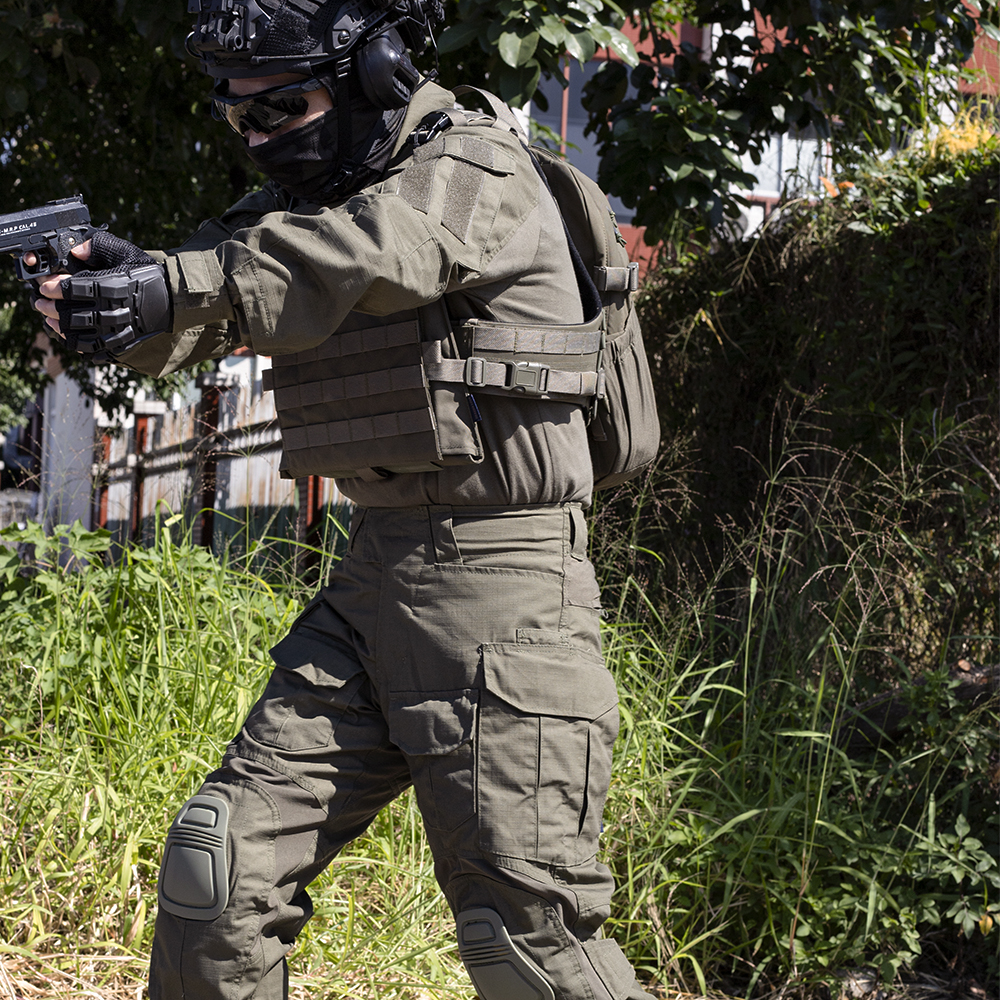
Bullet proof vests are classified into six levels based on their level of protection:
NIJ I: It can withstand bullets with an initial velocity of around 329 meters per second and a bullet weight of 2.6 grams, or bullets with an initial velocity of 320 meters per second and a bullet weight of 6.2 grams.
NIJ IIA: Can withstand bullets with an initial velocity of around 373 meters per second and a bullet weight of 8 grams, or bullets with an initial velocity of 352 meters per second and a bullet weight of 11.7 grams. In addition, there are bullets with an initial velocity of around 275 meters per second and a warhead weight of 14.9 grams.
NIJ II: It can withstand bullets with an initial velocity of around 398 meters per second and a bullet weight of grams, or bullets with an initial velocity of 436 meters per second and a bullet weight of 10.2 grams.
NIJ IIIA: It can withstand bullets with an initial velocity of around 448 meters per second and a bullet weight of 8 grams, or bullets with an initial velocity of 436 meters per second and a bullet weight of 15.6 grams.
NIJ III: Can withstand bullets with an initial velocity of around 847 meters per second and a warhead weight of 9.6 grams. This level is for hard/composite bulletproof vests.
NIJ IV: Can withstand bullets with an initial velocity of around 887 meters per second and a warhead weight of 10.8 grams. This level is for hard/composite bulletproof vests.